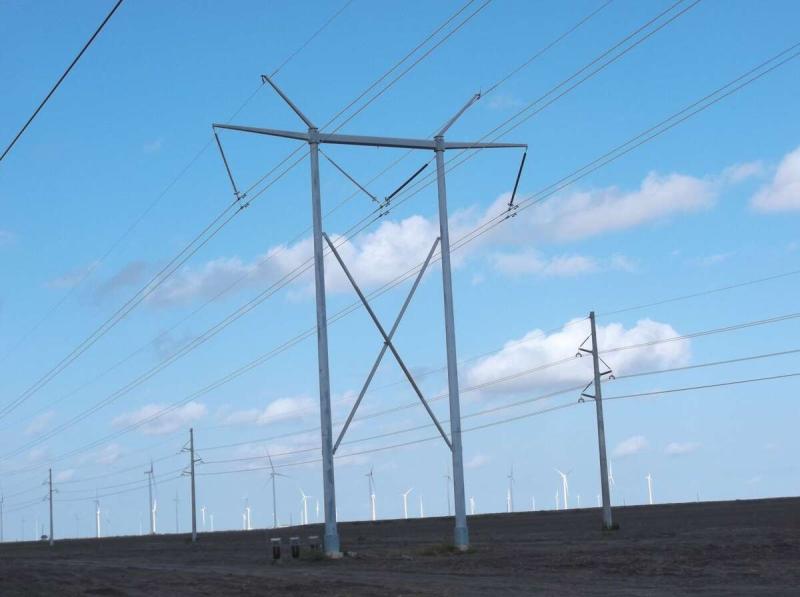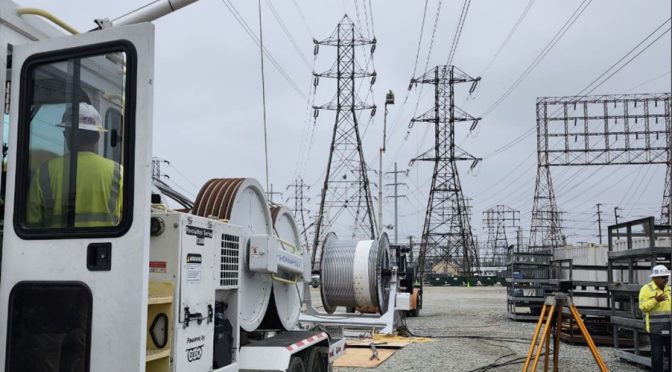
Utilities in the U.S. are increasingly choosing CTC Global’s ACCC® Conductor for their power transmission needs due to several compelling advantages it offers over traditional conductors.
Here are the top three reasons why utilities are opting for ACCC® Conductor:
1. Higher Capacity and Efficiency
Increased Ampacity: ACCC Conductors can carry more current (ampacity) compared to traditional aluminum conductors with steel reinforcement (ACSR). This is due to the composite core material, which has a much higher strength-to-weight ratio than steel. As a result, ACCC Conductors are able to handle higher loads without the need to increase the conductor size, making them more efficient for transmitting electricity.
Reduced Line Losses: Because ACCC Conductors have a lower electrical resistance than conventional conductors, they also experience lower line losses, improving overall transmission efficiency. This helps utilities reduce energy waste and optimize grid performance.
2. Improved Reliability and Durability
Enhanced Mechanical Strength: The composite core of the ACCC Conductor provides better mechanical strength and resilience to environmental conditions, such as high winds, ice, and temperature fluctuations. This increased durability reduces the likelihood of outages and the need for frequent maintenance or replacement, which is crucial for ensuring a reliable power supply.
Reduced Sag and Expansion: ACCC Conductors experience less thermal sag at high operating temperatures compared to traditional ACSR or ACSS conductors. This is especially important in areas with high ambient temperatures or during periods of high demand, as it allows utilities to maintain safe clearances and reduce the risk of line failures.
3. Cost-Effective Infrastructure Upgrade
Smaller Footprint for Upgrades: ACCC Conductors can often be installed on existing transmission towers without the need to rebuild or significantly modify the infrastructure. This reduces the capital investment needed for grid upgrades, making it a cost-effective solution for utilities looking to expand their capacity or improve the performance of aging infrastructure.
Longer Lifespan and Lower Maintenance: The materials used in ACCC Conductors (such as the composite core and aluminum outer strands) offer superior resistance to corrosion compared to traditional steel-core conductors, leading to longer service life and lower maintenance costs over time.
By addressing both capacity and reliability concerns while offering a more cost-efficient upgrade path, CTC Global’s ACCC Conductor has become an attractive option for utilities seeking to improve the performance of their transmission networks.