Abstract
This article presents a series of international case studies highlighting the successful deployment of CTC Global’s ACCC® Conductor in 400 kV and higher voltage transmission systems. These projects demonstrate how ACCC® Conductor offers superior performance compared to traditional steel-reinforced conductors such as ACSR and ACSS. Key benefits discussed include increased capacity, reduced line losses, longer spans, fewer structures, and overall reductions in capital and lifecycle costs. The paper also explores how these advancements reduce fuel consumption, greenhouse gas emissions, and electricity costs to end users – contributing directly to regional economic development. The paper is intended for transmission engineers seeking innovative solutions to modern grid challenges.
Introduction
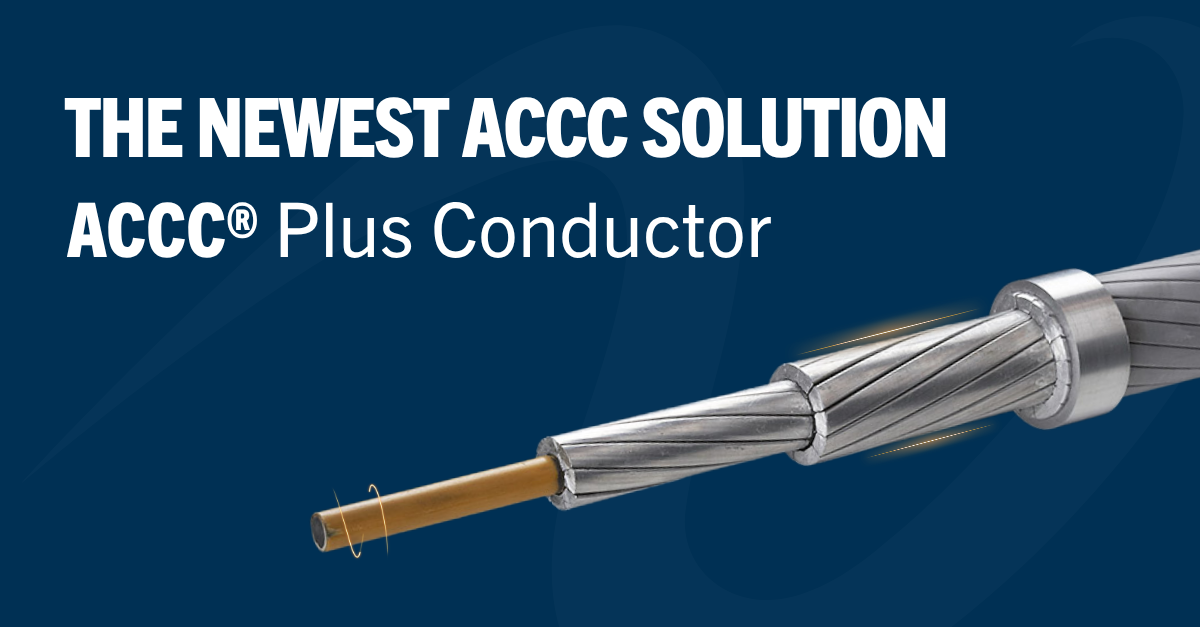
As global energy demand continues to rise and electricity grids evolve to accommodate the increasing integration of renewable energy sources and cross-border power exchanges, transmission planners are looking for high-performance solutions that enhance capacity, improve efficiency, and ensure reliability. In this context, CTC Global’s ACCC® Conductor has emerged as a leading solution for 400 kV and higher voltage applications. Featuring a carbon fiber composite core and advanced aluminum strands, the ACCC® Conductor addresses many of the limitations of traditional conductors.
This article presents a detailed analysis of several notable high-voltage transmission projects across Asia and Europe where ACCC® Conductor was selected. In addition to providing valuable insights into the conductor’s technical and economic benefits, this paper highlights the broader environmental and socio-economic motivations behind these projects, particularly the reduction of transmission losses which in turn conserves fuel, lowers emissions, and reduces overall costs to consumers.
While this paper emphasizes projects at 400 kV and above, ACCC® Conductor has also proven its value in lower voltage applications. Notably, American Electric Power (AEP) used ACCC® Conductor to upgrade 120 miles of 345 kV lines, doubling capacity without replacing structures and completing the energized project eight months early. The project cut line losses by 30%, saving 300,000 MWh annually – about $15 million in costs – while reducing CO₂ emissions by 200,000 metric tons per year, equivalent to removing 42,000 cars from the road.
In China, ACCC® Conductor was deployed on the ±1100 kV Zhundong–Huainan UHV DC line – the world’s highest voltage transmission project. CTC Global’s partner NARI Huaisheng supplied 291 kilometers of ACCC® Conductor for the grounding line at the Guquan converter station. This line spans over 3,300 kilometers and delivers 66 billion kWh annually to eastern China, underscoring ACCC® Conductor’s adaptability and strategic value in modern transmission networks.
Technology Overview: ACCC® Conductor vs. ACSR/ACSS
The ACCC® Conductor offers a number of technical advantages over traditional steel-reinforced conductors such as ACSR and ACSS. One of the most notable benefits is its ability to operate efficiently at temperatures up to 180°C, compared to the typical 90°C limit for ACSR. This capability allows for increased current-carrying capacity, especially important in high-demand corridors or long-distance transmission.
The carbon fiber composite core at the heart of ACCC® Conductor has a very low coefficient of thermal expansion, which significantly reduces thermal sag even under elevated operating conditions. This enables longer spans between towers and helps maintain safe electrical clearances, even in extreme ambient temperatures. Additionally, the conductor’s trapezoidal aluminum strands increase conductivity and reduce resistance, yielding lower I2R losses and improved overall system efficiency. The reduction in electrical losses translates directly into lower fuel consumption in thermal power plants, increased availability of generation capacity, and meaningful reductions in carbon emissions.
From a structural perspective, the high strength and lighter weight of the ACCC® Conductor allows for taller spans and reduced tower heights, which can lead to substantial savings in tower steel, foundations, and right-of-way requirements. These attributes contribute to both upfront capital savings and long-term operational benefits, making ACCC® Conductor a compelling option for modern transmission networks.
Case Studies
Kaliakoir–Bogura 400 kV Transmission Line, Bangladesh
This 131.09-kilometer double-circuit transmission line serves as a critical infrastructure project linking key generation and load centers in Bangladesh. The line was energized in March 2025 and utilized approximately 3,150 kilometers of ACCC® Dhaka Conductor. Funded by the Government of Bangladesh and the Indian Exim Bank, this project was designed to strengthen regional interconnection and support increased electricity imports from neighboring countries. The choice of ACCC® Conductor allowed for high ampacity and thermal performance while minimizing tower height and footprint through reduced sag. The result was a faster, more cost-effective installation that also delivered long-term energy savings and grid reliability enhancements.
Barapukuria–Bogura 400 kV Line, Bangladesh
Spanning 112 kilometers, this line complements the Kaliakoir–Bogura corridor and further reinforces the national grid’s northern reach. Tata Projects Ltd led the engineering and construction efforts, employing ACCC® Dhaka Conductor to optimize span lengths and minimize ROW acquisition challenges. More than one million man-hours were logged without safety incidents, and the deployment demonstrated ACCC® Conductor’s constructability and performance under local environmental conditions. Tower costs and environmental impact were both significantly reduced due to the conductor’s low sag characteristics.
Bogura–Rohanpur 400 kV Line, Bangladesh
This 104-kilometer line was designed to improve transmission capacity in western Bangladesh. ACCC® Conductor was deployed in a twin-bundle configuration to replace legacy ACSR Finch conductors, substantially enhancing thermal ratings without necessitating structural modifications. The Asian Development Bank supported the financing of this project, recognizing the value of ACCC® Conductor in extending grid capabilities while reducing line losses and increasing operational reliability. The line plays a critical role in ensuring uninterrupted power delivery across important regional load zones.
500 kV Nhon Trach–Phu My–Nha Be Transmission Line, Vietnam
Stretching 53 kilometers through southern Vietnam, this 500 kV transmission line features quad-bundled ACCC® Lisbon Conductor to meet high-density urban power demand. Developed by EVN and its partners, the project was engineered to withstand elevated ambient temperatures while ensuring reliable load transfer in constrained corridors. The use of ACCC® Conductor allowed for tight routing through developed zones, reduced right-of-way requirements, and enhanced system resilience. The conductor’s high ampacity and low sag minimized structural requirements and expedited project completion.
400 kV Transmission Line, Peloponnese, Greece
In a region characterized by mountainous terrain and increasing renewable energy contributions, this 400 kV line became Greece’s first ACCC® Conductor installation. Supported by the Hellenic Transmission System Operator (IPTO) and EU energy modernization funds, the project enabled secure transmission of wind and solar energy from the Peloponnese to the national grid. ACCC® Conductor’s lightweight, high-strength profile allowed for fewer towers and minimized environmental disturbance during construction. The line not only addressed immediate transmission needs but also laid the groundwork for future grid flexibility.
400 kV Ganga River Crossing, India
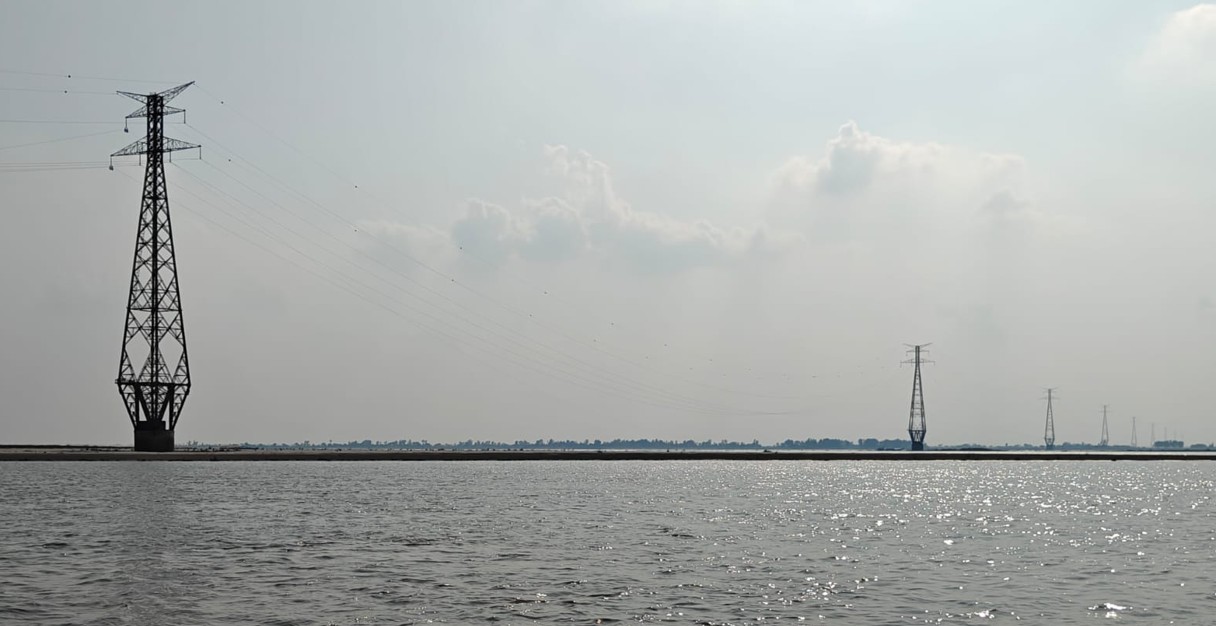
One of the most technically challenging projects in the region, the Ganga River crossing featured ACCC® Ganga ULS Conductor in a 400 kV quad bundle configuration. Developed by Sterlite Power, this project leveraged ACCC® Conductor’s ultra-low sag characteristics to span the wide river without requiring costly and complex mid-river tower installations. The resulting design reduced environmental impact, improved safety, and enabled a more streamlined permitting and construction process. The conductor’s robust performance in this long-span application showcased its capability for similar topographical challenges elsewhere.
Conclusions
The international projects reviewed in this paper provide clear evidence of the performance and economic advantages of ACCC® Conductor for 400 kV and higher voltage transmission systems. Whether the objective is to minimize tower counts, reduce installation time, enable greater power transfer, or improve system efficiency, ACCC® Conductor has proven to be a superior alternative to traditional conductors.
By facilitating longer spans and reducing thermal sag, ACCC® Conductor delivers capital cost savings while enhancing grid reliability. Its ability to reduce line losses contributes to operational cost reductions, improved generation resource utilization, and reduced emissions. These factors not only benefit utility operators but also support consumers by reducing electricity costs and fostering conditions conducive to sustained economic development.
As utilities and transmission planners face increasing demands for capacity, reliability, and decarbonization, ACCC® Conductor stands out as a key enabler of next-generation grid infrastructure. The case studies presented here – together with notable high-impact projects at 345 kV and even specialized UHVDC applications – underscore the conductor’s versatility and value across the global transmission landscape.