In the ongoing effort to modernize the transmission grid, much of the industry’s attention has rightly focused on conductor innovation. Advanced designs – particularly composite core conductors – have opened the door to higher capacity, lower losses, and improved thermal performance. These gains are real, measurable, and increasingly essential as utilities respond to load growth, renewable integration, and system constraints.
But amid this progress, there is a quieter, often underappreciated question that deserves far more attention than it typically receives:
How are these conductors actually being connected?
It is a deceptively simple question. After all, connectors have been part of transmission line design for generations, and their function is well understood. Yet composite core conductors introduce a fundamentally different set of mechanical and thermal characteristics – differences that challenge long-standing assumptions about how terminations and splices should perform.
And it is precisely at this interface – between conductor and hardware – where long-term reliability is either secured or quietly compromised.
Moving Beyond Legacy Assumptions
Traditional compression-based fittings were developed in an era dominated by steel-reinforced conductors. In those systems, the materials themselves provide a degree of forgiveness. Steel cores can accommodate localized stresses, and aluminum strands can redistribute load in ways that help maintain overall integrity, even when installation conditions are less than ideal.
Composite cores behave differently. They are lighter, stronger on a strength-to-weight basis, and far more dimensionally stable under load. But they do not plastically deform like steel, nor do they tolerate uneven stress distributions in the same way. The interface between the composite core and the connector must therefore be carefully managed – not simply compressed.
When conventional compression methods are applied without accounting for these differences, the result may still meet short-term installation requirements. Over time, however, the interaction between materials – particularly under thermal cycling and mechanical loading – can introduce subtle but important risks. These may include uneven load transfer, localized stress concentrations, or gradual changes in grip as the conductor experiences real-world operating conditions.
None of these outcomes are inevitable. But they are possible when the connector design does not fully reflect the behavior of the conductor it is intended to support.
The Importance of Engineering the Interface
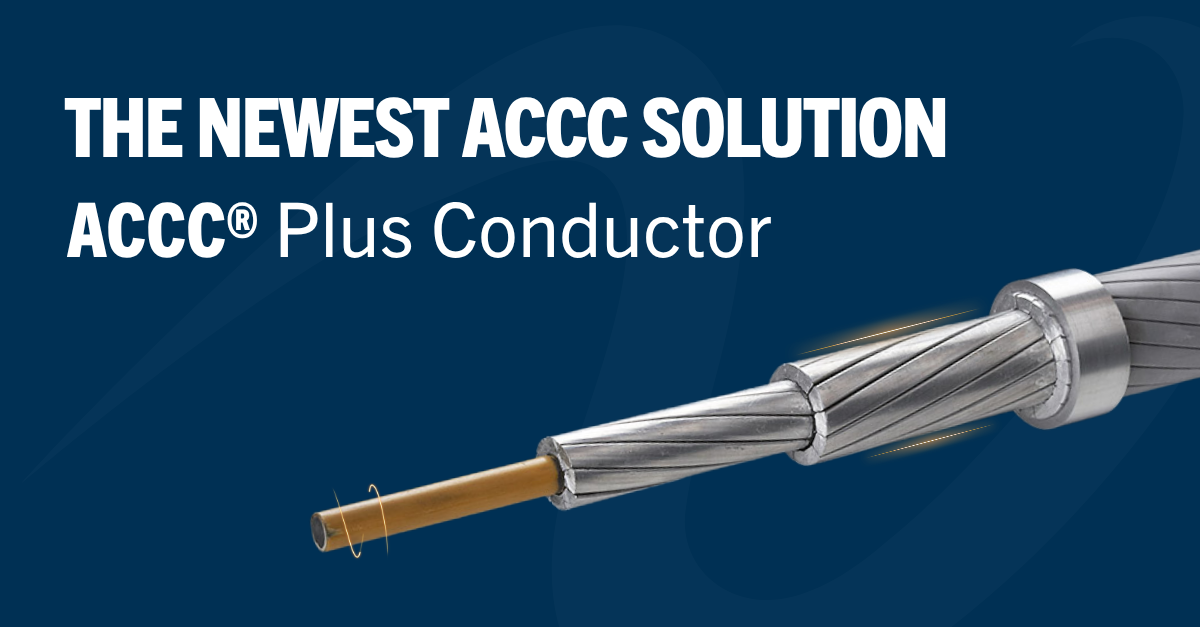
One of the key lessons learned through the development of ACCC® Conductor technology is that performance cannot be separated from the way the conductor is terminated. The interface is not simply a mechanical attachment point – it is an integral part of the overall system.
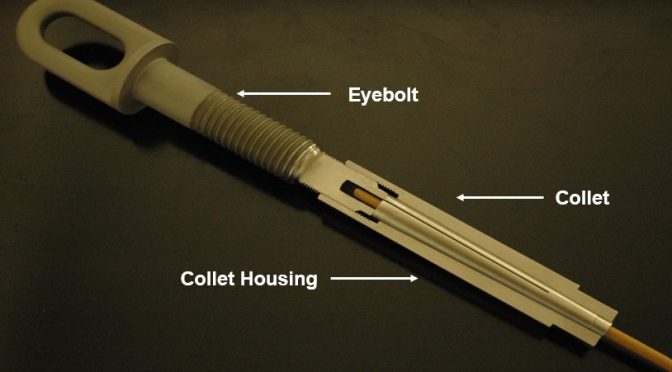
This realization led to the development of a purpose-built collet-based termination system, designed specifically to work with the unique elastic properties of composite cores. Rather than relying on high compressive forces alone, the collet approach distributes load more uniformly around the core, helping to avoid localized stresses while maintaining a consistent mechanical grip.
Equally important, the system is designed to accommodate the differing thermal expansion characteristics of aluminum strands and the composite core. As operating temperatures fluctuate, the connector maintains its integrity without introducing additional strain into the conductor. Over time, this contributes to both mechanical reliability and stable electrical performance.
The result is not just a secure connection, but a more balanced system – one in which conductor and hardware function together as intended.
A Broader Industry Transition
As composite core conductors become more widely adopted, the industry is in the midst of a broader transition. New designs are entering the market, bringing additional options and encouraging continued innovation. This is a positive development, reflecting growing recognition of the need for higher-performance transmission solutions.
At the same time, it highlights the importance of considering not only the conductor itself, but the completeness of the overall system design. Connector technology, installation methodology, and long-term performance validation all play a role in determining how well a given solution will perform over decades of service.
In some cases, established practices – such as the use of conventional compression fittings – are carried forward because they are familiar and well understood. In others, new approaches are being developed to better align with the characteristics of composite materials. The distinction between these approaches may not always be immediately visible, but it can have meaningful implications over the life of the line.
Reliability in a Changing Operating Environment
The operating environment for transmission lines is also evolving. Higher conductor temperatures, increased loading, and more dynamic system conditions are becoming the norm rather than the exception. At the same time, external pressures – from extreme weather to wildfire risk – are raising the consequences of any single point of failure.
In this context, connectors take on added importance. They must perform not only under ideal conditions, but across a wide range of thermal and mechanical scenarios, year after year. Their behavior under cyclic loading, their ability to maintain consistent contact, and their interaction with the conductor materials all contribute to overall system reliability.
What may once have been considered a secondary detail is now, quite clearly, a critical element of grid performance.
Asking the Right Questions
As utilities evaluate conductor options, it is increasingly important to look beyond headline performance metrics and consider how the entire system has been engineered. This includes taking a closer look at termination and splice design.
Questions worth asking include:
- Was the connector specifically designed for a composite core conductor?
- How is mechanical load transferred to the core, and how is stress managed?
- How does the system respond to thermal expansion differences over time?
- What testing or field experience supports long-term reliability?
These are not merely technical details – they are indicators of how thoroughly a solution has been developed and validated.
A System-Level Perspective
Composite core conductors offer significant advantages, and their role in enabling a more capable and resilient grid is becoming increasingly clear. But realizing their full potential requires a system-level perspective – one that recognizes the importance of every component, including those that are less visible.
Connectors may not attract the same attention as conductors themselves, but their role is no less important. When properly engineered, they help ensure that the performance gains achieved in conductor design are preserved over the life of the asset.
In the end, the success of any transmission solution is measured not only by how it performs on day one, but by how reliably it continues to perform over decades. That reliability begins – and often depends – at the point of connection.