Why Reconductoring Decisions Should Look Beyond High-Temperature Ratings
For many years, reconductoring decisions were often guided by a practical and understandable question: what conductor will provide enough additional capacity to solve the problem directly in front of us?
In a slower-growth environment, that question may have seemed reasonable. If an existing transmission line needed a higher emergency rating, improved clearance, or modest additional capacity, utilities often looked for a conductor that could be installed within the existing corridor, fit existing structures, and provide a near-term increase in ampacity. In many cases, conventional high-temperature conductors such as ACSS appeared to offer “enough” performance for the need at hand.
But the grid has changed.
Load growth, electrification, renewable energy integration, data-center development, congestion, resilience requirements, and aging infrastructure are all increasing faster than many earlier planning assumptions anticipated. A conductor that looked adequate when a project was engineered five or ten years ago may not provide enough useful headroom today. In this environment, “good enough” can become inadequate very quickly.
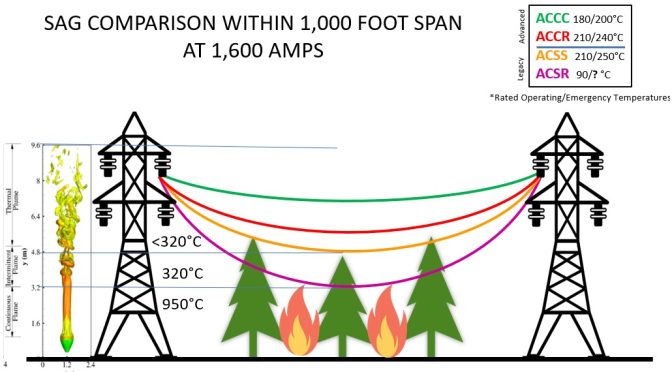
That is why reconductoring decisions need to look beyond nameplate ampacity and high-temperature ratings. A conductor may carry an impressive rating on paper, but theoretical ampacity is not the same thing as deliverable power. Very high operating temperatures increase electrical resistance, which increases line losses. Higher conductor temperatures can also increase sag, reduce clearance margins, stress hardware, and limit the amount of power a line can actually deliver under real-world operating conditions.
In other words, the most important question is not simply, “How hot can this conductor run?” The better question is, “How efficiently, safely, and reliably can this line deliver power while preserving room for future growth?”
That distinction is becoming increasingly important. When a conductor relies primarily on high operating temperature to increase ampacity, the system may gain a rating but lose efficiency. It may solve a theoretical constraint while creating or exposing a sag constraint. It may provide a short-term answer without delivering the long-term operating margin utilities will need as demand continues to rise.
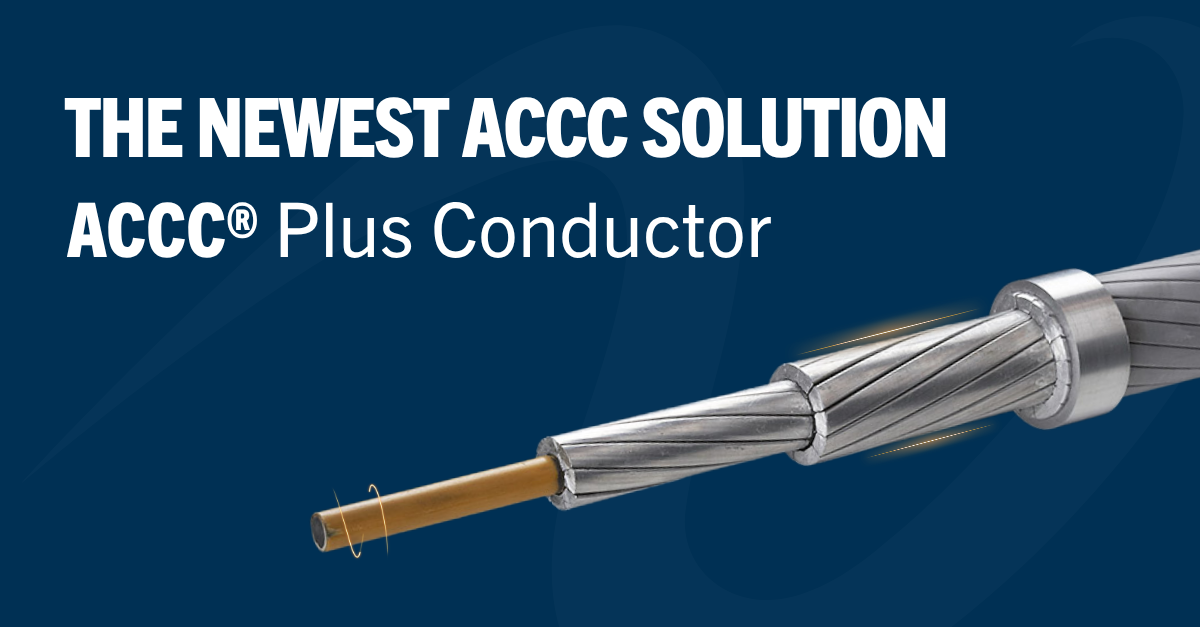
CTC Global’s ACCC® Conductor was developed to address reconductoring from a broader performance perspective. Rather than depending on extreme operating temperatures, ACCC Conductor combines a high-strength, low-sag composite core with compact trapezoidal aluminum strands that allow the conductor to incorporate substantially more conductive aluminum without increasing diameter or weight. This helps utilities increase capacity, reduce sag, lower line losses, and improve the long-term value of existing transmission corridors.
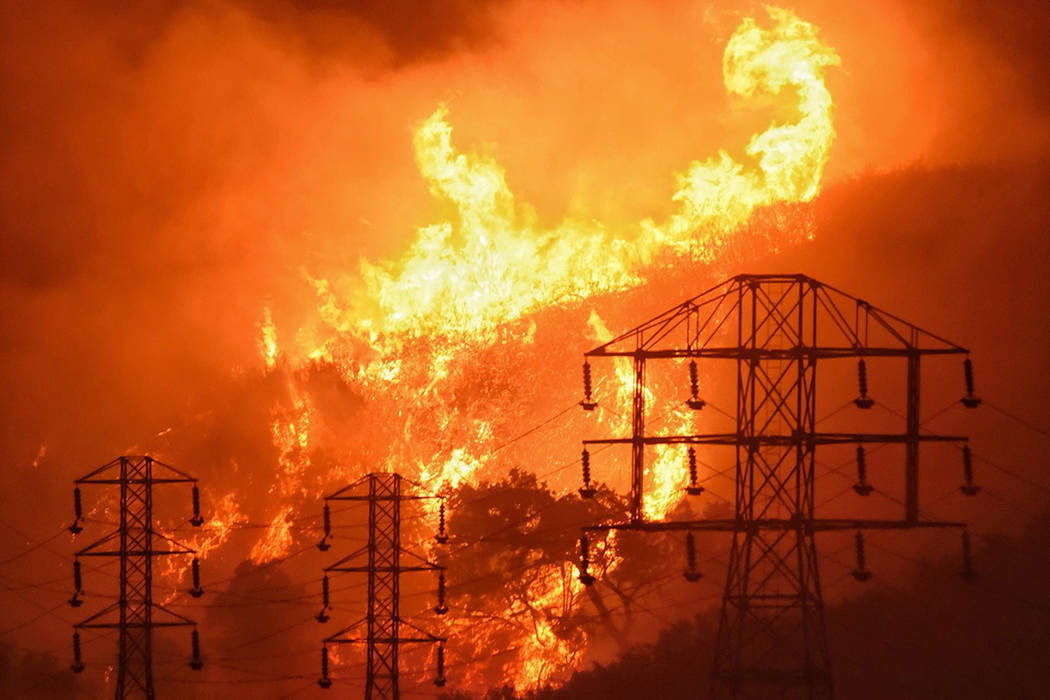
Those differences matter. Lower sag can help preserve ground clearances, reduce wildfire risk, and avoid costly structure modifications. Lower resistance can reduce losses and improve delivered power. A lighter, stronger composite core can help utilities reuse existing structures while improving line performance. And because ACCC Conductor does not rely on steel for strength, it also avoids many of the corrosion, cyclic load fatigue, and thermal expansion issues associated with steel-core conductors.
In the past ACSS served the industry in some applications but many of today’s reconductoring projects require more than a conductor that can tolerate high temperatures. They require a conductor that can create durable headroom, reduce operating costs, improve efficiency, support reliability, and preserve future options as system needs continue to evolve.
This is where the industry’s thinking needs to shift. Reconductoring should not be viewed as a short-term fix or a minimum-compliance exercise. It is a rare opportunity to improve the performance of an existing transmission asset for decades. Once engineering, outages, crews, permitting, and capital are committed, the conductor selected will define the value of that corridor for a generation.
In today’s environment, utilities cannot afford to ask only what is enough for the next five years. They need to ask what will still be enough ten, twenty, or forty years from now.
The grid does not simply need higher ratings. It needs more deliverable power, lower losses, greater resilience, and smarter use of the infrastructure already in place. Advanced reconductoring with ACCC Conductor helps utilities meet those needs by transforming existing corridors into higher-performing assets – not just hotter ones.
Enough may have been enough for the last planning cycle. It is not enough for the grid we are building now.