A recent LinkedIn post from Layla Sawyer, Secretary General at CurrENT, highlighted an important statement made during a plenary debate in Strasbourg by MEP Tsvetelina Penkova, rapporteur for the TEN-E Regulation:
“Europe cannot electrify its future with grids built for the past.”
Layla added an equally important point:
“You cannot build the grid of tomorrow with only yesterday’s technologies.”
CTC Global agrees wholeheartedly.
As a proud member of CurrENT, CTC Global supports the organization’s mission to accelerate the deployment of innovative grid technologies that can help strengthen, expand, and modernize electric power systems. CurrENT’s work is especially important at a time when Europe and other regions around the world are working to electrify transportation, buildings, industry, and other sectors while integrating more renewable energy, improving reliability, and keeping electricity affordable for consumers.
The challenge is clear. The electric grid is being asked to do far more than it was originally designed to do. Electricity demand is growing. Renewable generation is expanding. Load patterns are changing. Extreme weather is increasing stress on existing infrastructure. Interconnection queues remain long. Congestion costs continue to rise. At the same time, the development of new transmission corridors can take many years due to planning, permitting, siting, cost allocation, supply chain, and construction challenges.
New transmission will absolutely be needed. But in many cases, the fastest, most practical, and most cost-effective opportunity is to get more capacity, efficiency, and reliability from the grid infrastructure already in place.
That is where advanced reconductoring plays an essential role.
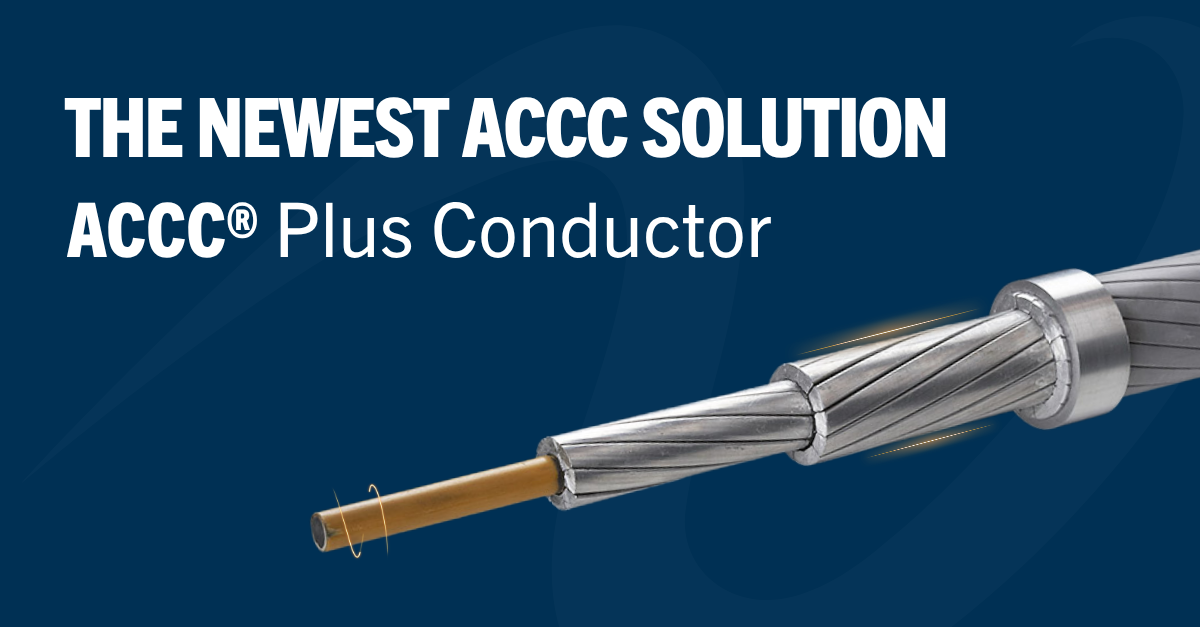
For more than two decades, CTC Global has worked with utilities, transmission owners, conductor manufacturers, engineering firms, contractors, regulators, and other industry stakeholders to deploy ACCC® Conductor around the world. ACCC Conductor was developed specifically to help utilities increase capacity, reduce line losses, improve reliability, minimize thermal sag, and strengthen the performance of existing overhead transmission and distribution lines.
Unlike conventional steel-reinforced conductors, ACCC Conductor uses a lightweight, high-strength composite core. This allows the conductor to incorporate more conductive aluminum within a similar diameter and weight profile. The result is a conductor that can carry substantially more current, reduce electrical losses, and maintain greater clearance under high-temperature operating conditions compared to many traditional conductor technologies.
For utilities, these benefits can be especially valuable when upgrading existing lines. By reconductoring with ACCC Conductor, utilities can often increase the capacity of existing corridors while reusing existing towers or poles. This can reduce the need for new rights-of-way, lower environmental and community impacts, accelerate project schedules, and help deliver more value from existing infrastructure.
This is not a theoretical solution. ACCC Conductor has been deployed on more than 1,600 projects in over 70 countries and 30 U.S. states. These projects include high-voltage transmission upgrades, renewable energy integration projects, river crossings, sub-transmission improvements, storm hardening projects, and reconductoring projects where utilities needed to move more power through existing corridors without creating new ones.
The benefits extend beyond capacity alone. Reducing line losses can lower operating costs and reduce the amount of generation needed to serve the same load. Reducing sag can improve ground clearance and help maintain reliable operation during high-load or high-temperature conditions. The composite core’s high strength, light weight, and corrosion resistance can also help utilities address difficult environmental and mechanical challenges.
These advantages align closely with the broader message advanced by CurrENT and other leaders working to accelerate grid modernization: the technologies needed to improve grid performance already exist. The challenge is deploying them faster, evaluating them more consistently, and ensuring that planning and procurement processes recognize lifecycle value rather than focusing primarily on initial cost.
That distinction matters.
A conductor is not simply a commodity. Its performance affects capacity, efficiency, reliability, line clearances, structure loading, operating flexibility, and long-term cost. In an era of rapid electrification, increasing renewable integration, and growing pressure on transmission systems, these differences can have system-wide implications.
CTC Global’s broader technology platform also reflects this need for practical, deployable innovation. ACCC InfoCore® System helps support conductor integrity verification before, during, and after installation. The GridVista™ System, developed with embedded fiber-based sensing capabilities, is designed to provide utilities with real-time intelligence to better understand line conditions and support more dynamic grid operation. Together with ACCC Conductor, these solutions are intended to help utilities build a grid that is not only stronger, but smarter.
The statement from Strasbourg deserves attention because it captures the urgency of the moment. Europe cannot electrify its future with grids built for the past. The same is true for North America, Asia, Africa, Latin America, and every region working to expand electrification, integrate cleaner energy resources, and improve reliability.
The future grid will require new transmission lines. It will also require better use of the lines already in service. It will require better planning, better policy, better regulatory frameworks, and better incentives. But it will also require proven technologies that can be deployed today.
CTC Global is proud to be part of CurrENT and proud to support the global effort to accelerate the deployment of advanced grid technologies. ACCC Conductor is one of the tools utilities can use now to increase capacity, reduce losses, improve resilience, and unlock more value from existing transmission corridors.
The grid of tomorrow cannot be built with yesterday’s technologies.
Fortunately, many of tomorrow’s solutions are already here.