The evolution of advanced overhead conductors demonstrates why engineering leadership is measured in decades – not marketing claims.
The electric power industry is entering one of the most significant periods of transmission investment in modern history. Growing electricity demand, artificial intelligence, hyperscale data centers, domestic manufacturing, renewable energy integration, and transportation electrification are all increasing the need for higher-capacity, more efficient, and more resilient transmission infrastructure. As utilities evaluate technologies capable of meeting these demands, one phrase appears with increasing frequency:
“Next-generation technology.”
It is an appealing description – but what does it actually mean from an engineering perspective?
True next-generation technology is not defined by a single new material, a higher operating temperature, or an incremental improvement in one performance characteristic. Nor is it created by replicating an existing concept. Throughout the history of overhead transmission, the technologies that have delivered the greatest long-term value have shared one defining characteristic: they evolved continuously through years of engineering refinement, extensive validation, manufacturing excellence, field experience, and an unwavering commitment to solving increasingly complex utility challenges.
The evolution of overhead transmission conductors illustrates this principle particularly well. For more than a century, conductor technology has advanced through successive generations of engineering innovation. Early copper conductors enabled the first transmission systems. Aluminum reduced weight and improved economics. Steel reinforcement expanded mechanical capability. High-temperature conductor designs increased operating flexibility. Composite materials fundamentally changed the relationship between strength, thermal expansion, and electrical performance. Each generation addressed the most important engineering challenges of its time while laying the foundation for future innovation.
Perhaps the most important lesson from this progression is that meaningful innovation rarely ends when a new product is introduced. In reality, that is often where the engineering work truly begins. Manufacturing processes continue to improve. Purpose-built hardware evolves. Installation practices mature. Quality assurance systems become more sophisticated. Independent testing expands. International standards develop. Field experience identifies opportunities for further refinement. Over time, dozens of incremental engineering improvements collectively transform an innovative concept into a mature, reliable transmission platform trusted by utilities around the world.
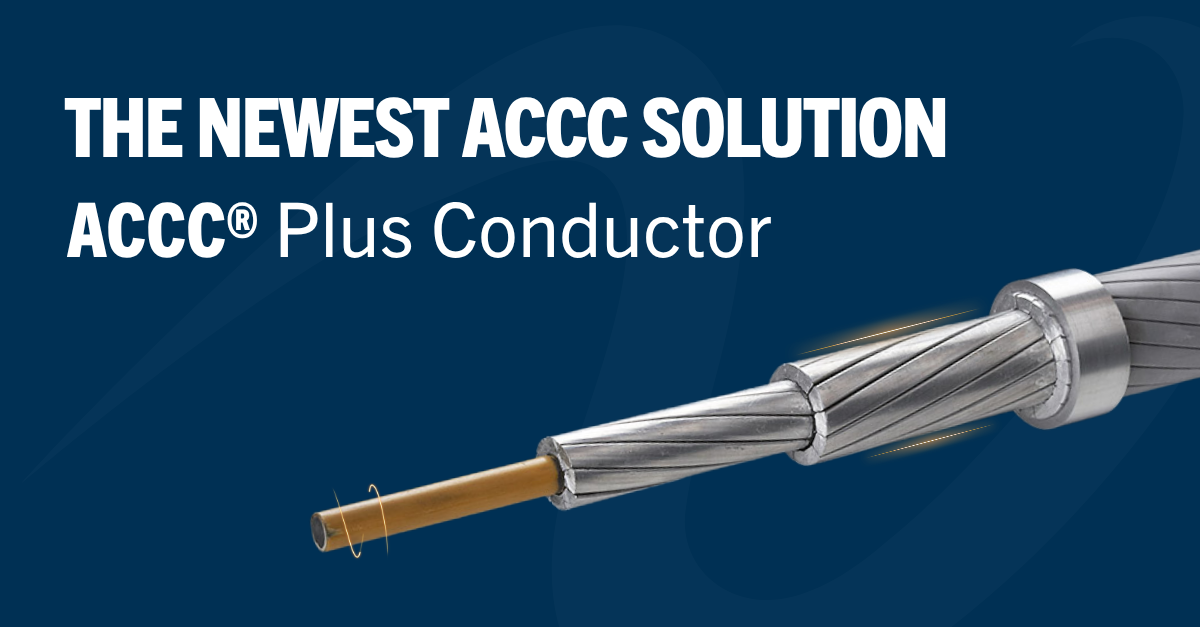
This philosophy has guided CTC Global since the introduction of ACCC® Conductor more than two decades ago. Rather than viewing innovation as a single product launch, the company has consistently invested in the continuous evolution of its technology platform. Advances in composite core architecture, purpose-built hardware systems, manufacturing quality, installation engineering, quality assurance, and long-term field validation have steadily expanded the capabilities and reliability of ACCC® Conductor while helping establish advanced conductors as a mainstream transmission solution. More recently, innovations such as the ACCC InfoCore® System and the GridVista™ System have extended that philosophy beyond power delivery itself by introducing embedded fiber-optic technologies capable of supporting conductor verification, distributed sensing, and intelligent transmission asset management.
This continuous engineering evolution represents an important distinction. Modern transmission conductors should no longer be viewed simply as combinations of aluminum strands and structural cores. They are complete engineered systems whose long-term performance depends upon the successful integration of materials science, mechanical engineering, hardware design, manufacturing excellence, installation practices, quality assurance, standards development, and operational experience. Utilities are increasingly evaluating technologies through this broader systems perspective because long-term asset value depends upon how effectively every component performs together throughout decades of reliable operation.
As utilities prepare for the next generation of transmission investment, this systems-engineering approach will become increasingly important. Tomorrow’s transmission infrastructure will be expected to deliver greater capacity, lower losses, improved resilience, enhanced reliability, better operational awareness, and longer service life while maximizing the value of every transmission corridor. Meeting these expectations will require more than isolated product improvements. It will require continuous engineering innovation supported by decades of practical experience, proven manufacturing capability, purpose-built hardware, rigorous validation, and an ongoing commitment to advancing the technology long after its initial introduction.
At CTC Global, we believe this is what truly defines next-generation technology. It is not a marketing claim. It is the result of continuous engineering innovation that never stops. That philosophy has shaped the evolution of ACCC® Conductor for more than twenty years and continues to guide the development of the intelligent transmission technologies that will help define the future of the electric grid.
The next generation of transmission infrastructure will not be built through isolated breakthroughs. It will be built through the continuous engineering evolution of complete transmission systems – an evolution that CTC Global is proud to help lead.