When Grid Constraints Become an Economic Problem
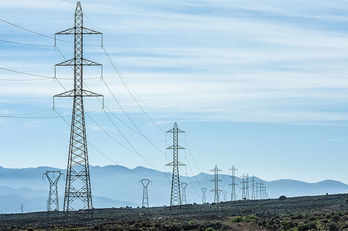
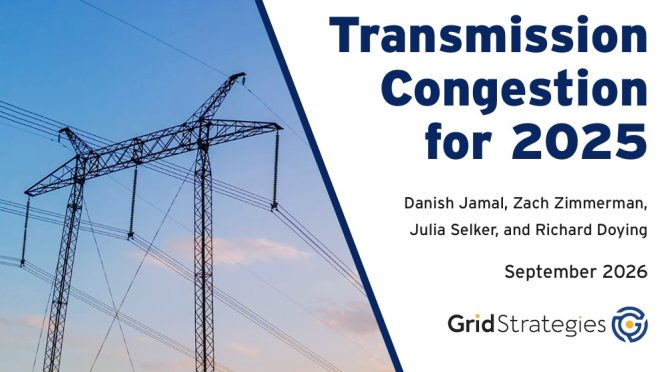
America’s transmission challenge is increasingly being measured not only in megawatts, miles of new transmission, or years spent waiting for projects to be permitted and constructed. It can also be measured in dollars – and the number is becoming increasingly difficult to ignore. A new September 2026 report from Grid Strategies, Transmission Congestion for 2025, estimates that U.S. grid congestion costs exceeded $17 billion in 2025, up substantially from approximately $12 billion in 2024. Even more concerning is the longer-term trend. Prior to 2021, annual congestion costs had never exceeded $8 billion, while inflation-adjusted average annual congestion costs increased from approximately $9.2 billion during 2016–2020 to $16.1 billion during 2021–2025.
CTC Global would like to recognize and thank Danish Jamal, Zach Zimmerman, Julia Selker, and Richard Doying of Grid Strategies for preparing this important report for the Connected Grid Initiative. Their work does more than document another year of rising congestion. It provides a clear and pragmatic discussion of why congestion is increasing and, importantly, identifies a portfolio of solutions that can help address the problem. The report points to expanded regional and interregional transmission, battery storage, Grid Enhancing Technologies (GETs), and Advanced Transmission Technologies – including High Performance Conductors (HPCs) – as complementary tools that can increase transmission capacity, improve reliability, and reduce the economic burden imposed by an increasingly constrained grid.
Congestion Is Becoming a Structural Problem
The report makes clear that 2025 was not an anomaly. Limited transmission expansion, increasing electricity demand, extreme weather, higher natural-gas prices, and transmission and generation outages are all contributing to congestion. The underlying problem is relatively straightforward: when lower-cost generation cannot reach customers because transmission capacity is constrained, system operators must rely on more expensive resources. Those physical limitations create economic consequences that ultimately affect electricity consumers.
This distinction is important because America does not necessarily lack available electricity everywhere congestion occurs. In many instances, lower-cost generation is already available – it simply cannot be delivered to where it is needed because the transmission system does not have sufficient transfer capacity. Grid Strategies makes this point particularly well, noting that congestion can indicate that low-cost power is already available on the system but simply “not in the right place,” and that transmission capacity provides an efficient means of optimizing delivery of those resources.
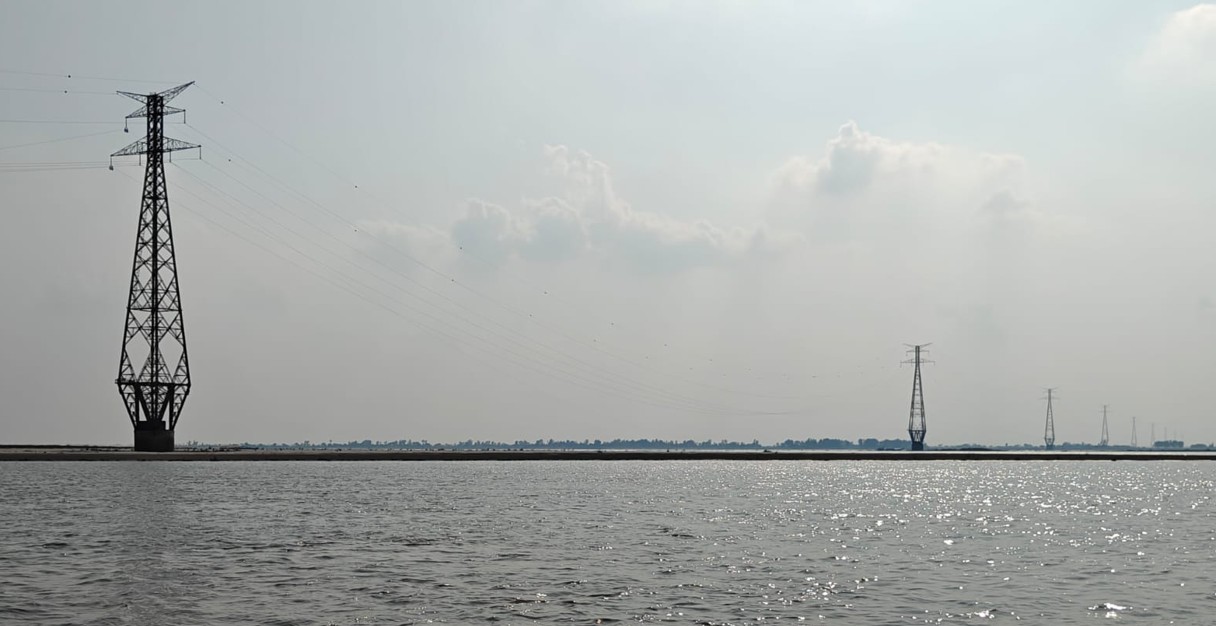
That challenge is likely to become increasingly important as electricity demand grows. Building new transmission will remain essential, but the pace of construction illustrates why new lines cannot be the only answer. Grid Strategies reports that just 411 miles of new high-capacity transmission were completed in the United States during 2025, far short of the approximately 5,000 miles per year it says are needed to reliably and affordably serve growing demand.
Build More – and Get More From What We Already Have
The answer is not to choose between building new transmission and improving the existing grid. We need to do both.
Grid Strategies strongly supports additional regional and interregional transmission. Its report cites the U.S. Department of Energy’s Draft 2026 National Transmission Needs Study and other research demonstrating the particularly high economic value of interregional transfer capability. The analysis cited in the report finds potential values of $30/MWh or more for cross-interconnect connections, compared with $17–$18/MWh for the highest-valued intraregional links examined. It also notes that roughly half of congestion is concentrated in only 5% of hours, underscoring the value of greater transfer capability during periods of extreme system stress.
But new transmission takes time. Planning, permitting, securing rights-of-way, engineering, procurement and construction can require many years. Meanwhile, electricity demand continues to grow and congestion continues to impose substantial costs.
This is where Advanced Transmission Technologies become especially important. Grid Strategies identifies GETs – including Dynamic Line Rating, Advanced Power Flow Control and Transmission Topology Optimization – along with High Performance Conductors, which the report identifies as including Composite Core Conductors and Superconductors, as technologies available today to help increase the capability of the transmission system.
For CTC Global and the utilities we serve, that recognition is particularly significant.
High Performance Conductors Can Change the Equation
Grid Strategies states that reconductoring with High Performance Conductors offers grid operators an option for addressing congestion in less time and at lower cost than building new transmission lines. The report further notes that HPCs can be used to reconductor existing lines, doubling their capacity without requiring a new right-of-way. As new generation resources and rapidly growing loads place additional pressure on the underlying transmission network, the authors identify HPC reconductoring as a solution that can more quickly alleviate emerging congestion.
That observation goes directly to the challenge CTC Global set out to address when it developed ACCC® Conductor more than two decades ago.
The objective was never simply to create a conductor capable of operating at a higher temperature. The more important engineering challenge was to increase the amount of useful power that could be delivered through existing transmission corridors while addressing several of the limitations that constrain conventional conductors – including thermal sag, electrical resistance, conductor weight and structural loading.
That distinction remains important today. Notably, the Grid Strategies report’s discussion of High Performance Conductors specifically identifies Composite Core Conductors and Superconductors. The report does not compare individual conductor technologies, and we should not suggest that it does. But its framing reinforces an important point: increasing transmission capability involves considerably more than simply increasing a conductor’s allowable operating temperature. Conductor performance must ultimately be evaluated by how effectively, efficiently and reliably it can deliver additional power within the physical constraints of an actual transmission system.
Turning Existing Corridors Into Greater Grid Capacity
ACCC Conductor was developed specifically around that challenge. Its lightweight, low-thermal-expansion composite core enables substantially more conductive aluminum to be incorporated into a conductor design without the weight penalty associated with a conventional steel core. The additional aluminum can reduce electrical resistance and associated line losses, while the composite core substantially reduces thermal sag. Together, these attributes can enable utilities to increase the capacity of existing transmission corridors while retaining existing structures and rights-of-way in many applications.
Over more than two decades, the technology and the systems supporting it have continued to evolve. CTC Global has introduced ACCC ULS for applications requiring greater strength, AZR aluminum options for elevated-temperature applications, and most recently ACCC Plus. CTC has also continued to advance the broader conductor ecosystem through purpose-designed hardware and installation practices, the ACCC InfoCore® System for conductor integrity verification, and the GridVista™ embedded-fiber sensing system.
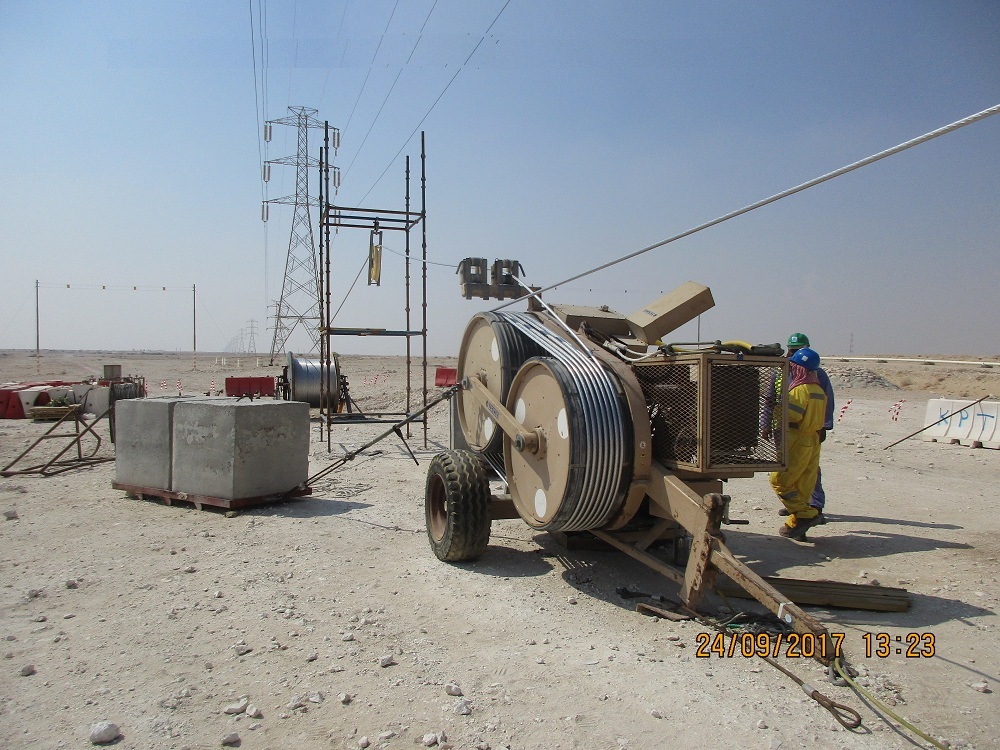
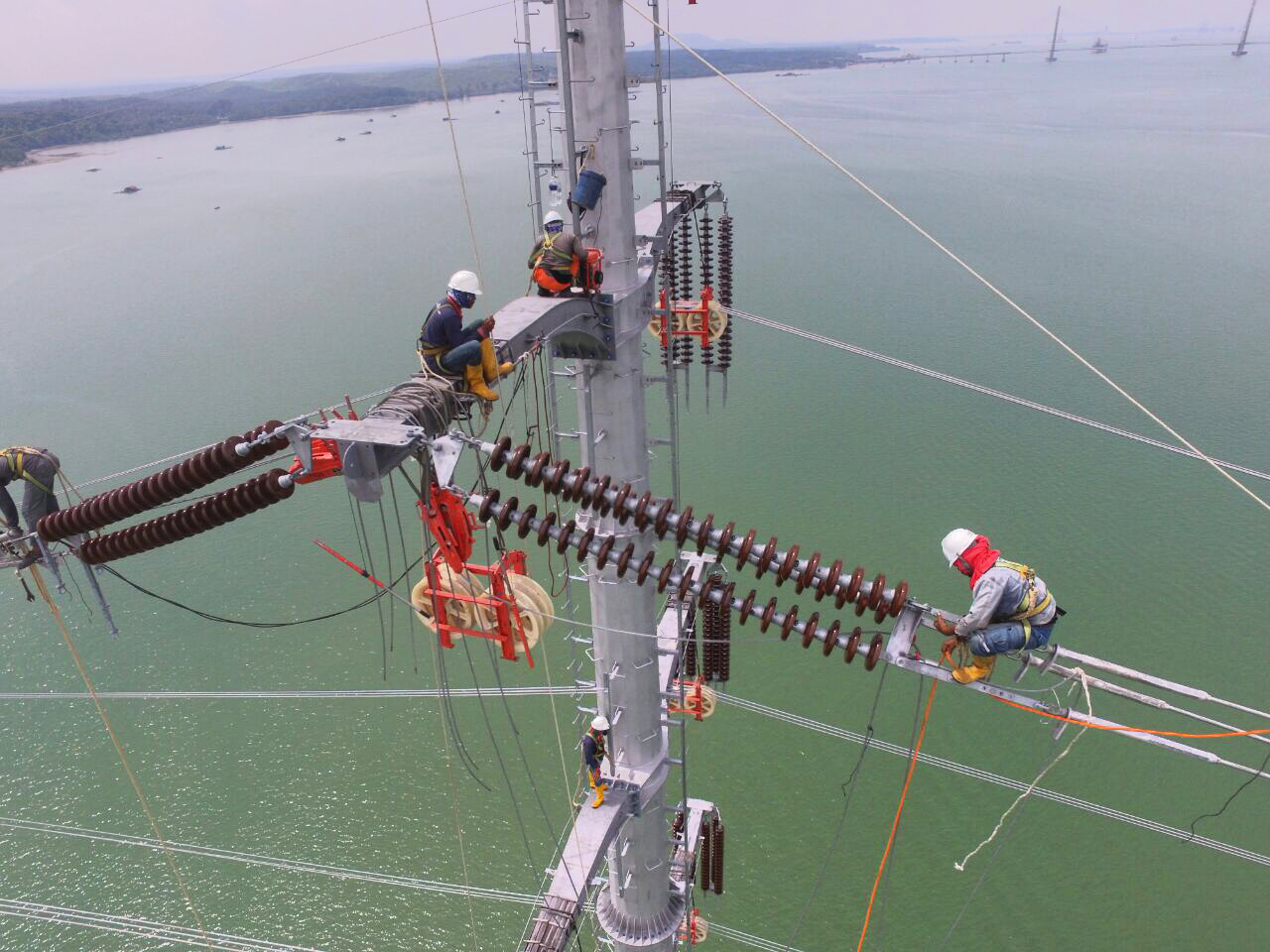
Just as importantly, these developments are supported by extensive real-world deployment experience. ACCC Conductor has been selected for more than 1,600 projects in 70 countries, supported by a global network of conductor manufacturers, hardware suppliers, installation specialists, utilities and other industry partners. That experience matters because increasing transmission capacity is not simply a materials challenge. Successful reconductoring requires proven conductor designs, appropriate hardware, well-developed installation procedures, trained personnel, quality assurance and substantial field experience.
Every Technology Has a Role
One of the strengths of Transmission Congestion for 2025 is that it does not suggest there is a single solution to America’s transmission challenge. Neither do we.
Battery storage can help manage localized constraints. Grid Enhancing Technologies can reveal unused capacity, optimize power flows and improve utilization of existing assets. High Performance Conductors can substantially increase the physical capacity of existing transmission corridors. New regional and interregional transmission can provide the large-scale transfer capability necessary for a more resilient and flexible grid.
These technologies should not be competing for attention. They should be deployed together where each provides the greatest value.
The Grid Strategies report provides a particularly compelling example. It notes that more consistent use of Ambient-Adjusted Ratings and emergency ratings in MISO could have avoided more than $300 million in congestion costs during 2025, representing roughly 15% of overall real-time congestion costs. Even more interesting, approximately two-thirds of those potential savings were concentrated in only 23 facilities.
That is an important reminder that transmission modernization does not always require rebuilding an entire system. Identifying specific constraints and deploying the appropriate technology at the appropriate location can produce disproportionate benefits.
The same principle applies to reconductoring. The objective is not to replace every conductor on the grid. It is to identify the corridors where conductor limitations are restricting economically valuable power flows and determine where modern High Performance Conductors can remove those constraints quickly, reliably and cost-effectively.
The Cost of Waiting Is No Longer Theoretical
Perhaps the most important contribution of this new Grid Strategies report is that it places an increasingly visible price tag on insufficient transmission capacity:
More than $17 billion in a single year.
And the longer-term trend is moving in the wrong direction. Grid Strategies concludes that congestion costs continue to be driven by increasing demand, slow transmission expansion, extreme weather and outages. The authors argue that reversing this trend will require expanding transmission capacity while increasing the use of proven solutions including Advanced Transmission Technologies, battery storage and improved interregional transmission planning.
CTC Global strongly agrees.
America needs more transmission. We need stronger regional and interregional connections. We need Grid Enhancing Technologies, storage, better planning and faster deployment of proven solutions. But we should also recognize the enormous asset already standing in front of us: thousands of miles of existing transmission corridors, structures and rights-of-way whose capacity can often be substantially increased using technologies available today.
High Performance Conductors give utilities an opportunity to transform those existing corridors into substantially more capable transmission assets—often without waiting for entirely new rights-of-way or entirely new transmission lines.
At a time when congestion is costing American consumers billions of dollars every year, getting more capacity, efficiency and resilience from infrastructure we already have is no longer simply an interesting engineering opportunity.
It is becoming an economic imperative.
CTC Global again thanks Danish Jamal, Zach Zimmerman, Julia Selker, Richard Doying, Grid Strategies, and the Connected Grid Initiative for bringing greater attention to this important issue and for helping advance the industry conversation around practical solutions that can strengthen the grid today while preparing it for the demands ahead.